
Titles by Dr. A. S. Ibrahim
The Enemy Within: Political Islam in American Public Life
Think and Tell, 2026
The Enemy Within is the first volume in Islam and the West, a three-volume series examining the rise and reach of political Islam in the modern world. This volume turns to the United States, analyzing how Islamist movements engage with American institutions, politics, and public life.
Drawing on primary sources, classical Islamic texts, and contemporary events, Ibrahim distinguishes political Islam as an ideology from Islam as a faith, and traces how that ideology operates within an open society—through advocacy organizations, activism, immigration, and the contest over public institutions. The book approaches a charged subject with historical context, careful argument, and scholarly restraint rather than polemic.
Collected from Ibrahim’s essays and paired with new retrospective commentary, the volume offers general readers, students, faculty, and policymakers a documented and accessible account of one of the defining questions of our time.
The Surrendered Continent: Political Islam and the Future of Europe
think and tell, 2026
The Surrendered Continent is the second volume in Islam and the West. This volume turns to Europe, analyzing how Islamist movements engage with European societies, institutions, and public life, and how governments have responded.
Drawing on primary sources, classical Islamic texts, and contemporary events, Ibrahim distinguishes political Islam as an ideology from Islam as a faith, and traces how that ideology advances across the continent—through immigration and integration debates, the politics of national identity, and the contest over law, speech, and public space. The book approaches a charged subject with historical context, careful argument, and scholarly restraint rather than polemic.
Collected from Ibrahim’s essays and paired with new retrospective commentary, the volume offers general readers, students, faculty, and policymakers a documented and accessible account of one of the defining questions facing Europe today.
Fire and Faith: Political Islam, the Middle East and American Power
think and tell, 2026
Fire and Faith is the third volume in Islam and the West. This volume turns to the Middle East, analyzing the region’s own struggles over faith, power, and governance-and the choices they present for American foreign policy.
Drawing on primary sources, classical Islamic texts, and contemporary events, Ibrahim distinguishes political Islam as an ideology from Islam as a faith, and traces how that ideology shapes conflict and statecraft across the region-through the contest between rival visions of Islamic governance, the fate of religious minorities, and the upheavals reshaping Iran, Syria, and the wider Middle East. The book approaches a charged subject with historical context, careful argument, and scholarly restraint rather than polemic.
Collected from Ibrahim’s essays and paired with new retrospective commentary, the volume offers general readers, students, faculty, and policymakers a documented and accessible account of a region central to the defining questions of our time.
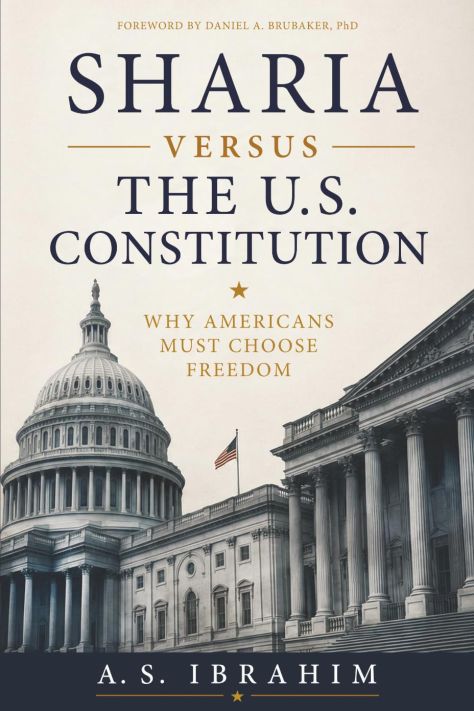
Sharia Versus the U.S. Constitution: Why Americans Must Choose Freedom
Think and tell, 2026
Can a nation founded on the consent of the governed accommodate a legal system that claims divine authority over every area of life? In Sharia Versus the U.S. Constitution, Dr. A. S. Ibrahim offers a clear and rigorous answer.
Drawing on the Quran, the hadith, and centuries of Islamic jurisprudence, Ibrahim moves through the American constitutional order amendment by amendment, showing where its guarantees collide with the requirements of Islamic law. The Establishment Clause was written to prevent the fusion of religious and civil authority that sharia demands. The free exercise of religion cannot coexist with laws prescribing death for apostasy.
Born in Egypt and trained in the classical Islamic sources, A. S. Ibrahim writes with both scholarly authority and firsthand knowledge of what Islamic law looks like when it governs.
A Medieval Case for Islam’s Superiority: The Letter of Ibn al-Layth to the King of the Romans
baylor university press, 2025
In the last decade of the eighth century, the longtime caliphal secretary, Ibn al-Layth (d. ca. 819), composed a letter on behalf of the caliph Hārūn al-Rashīd (r. 786-809) to the Byzantine emperor Constantine VI (r. 780-797). This letter is now widely considered to be the oldest surviving apologetic defense of Islam and polemic against Christianity. Ibn al-Layth’s apology for Islam is representative of other early apologies and includes a sustained effort to defend Muhammad’s character and prophetic office, the oneness of God, and the inimitability of the Qur’ān. Ibn al-Layth uses natural phenomena, reason, miracles, and a variety of biblical proof texts to justify his positions.
A Medieval Case for Islam’s Superiority makes Ibn al-Layth’s letter accessible to a broader audience for the first time. Ayman S. Ibrahim and Clint Hackenburg provide an improved critical edition of the Arabic text that consults all six known manuscripts, its first complete English translation, and a comprehensive introduction to Ibn al-Layth’s life and work. The book also demonstrates how Ibn al-Layth’s letter has been used by later Muslim thinkers in their arguments for the superiority of Islam over Christianity, marking the significance of the letter in the study of the historical relationship between Islam and Christianity.
Muhammad’s Military Expeditions: A Critical Reading in Original Muslim Sources
Oxford University press, 2024
The last ten years of Muhammad’s life are vitally important not only to the study of Islam’s prophet, but to the development of the religion itself. Prior to that last decade, Muhammad and his followers were tribally weak, and were persecuted by the Arabian elites of Mecca. Yet, according to Muslim accounts, by the end of his life Muhammad had become the sole leader of Western Arabia. This last decade was colored by strategic military expeditions and tactical treaties, in which Muhammad overcame all his tribal enemies. Yet English speakers have long had limited access to thorough studies of these expeditions based on the original Arabic primary sources. In this book, Ayman S. Ibrahim seeks to fill this scholarly gap, presenting an exhaustive account of Muhammad’s final decade, with specific emphasis on his military raids against various non-Muslim groups.
What can the Muslim tradition reveal about Muhammad’s military career? Did he really launch over seventy military campaigns? Why? Can we be certain that the military incursions described in Islamic sources actually took place? These are fundamental questions in any study of the life and activities of Muhammad, and Ibrahim looks for answers in this thoroughly-researched book. Considering the views of Muslims and non-Muslims, the motivations behind raids, and the development of Islam itself, Muhammad’s Military Expeditions leaves no stone unturned.
Islam and the Bible: Questioning Muslim Idiom Translations
b&H, 2023
As early as the seventh century, Christians living and ministering in Muslim contexts adapted their language and public witness to Islamic cultural and religious sensitivities. In Islam and the Bible, editors Ayman S. Ibrahim and Ant B. Greenham invite leading voices, representing a spectrum of approaches, to explore the issues surrounding “Muslim Idiom Translations” of the Bible. This work will be insightful for students, theologians, missiologists, missionaries, and Bible translators seeking wisdom and clarity on gospel contextualization.
A Concise Guide to Islam: Defining Key Concepts and Terms
Baker Academic, 2023
For many in the English-speaking world, Islam remains a mysterious religion. What is Islam in the first place? Does it mean “peace,” or does it mean “submission”? Can it mean both? What is jihad? Sharia? Hadith? Who is Allah? What is a caliph, caliphate, or infidel?
In this compact volume, Ibrahim provides explanations for more than one hundred important Islamic concepts and terms, which are divided into major sections: texts, history, faith and belief, practice and religious duties, jurisprudence, and movements. Ibrahim first introduces the section, then defines each concept or term briefly. Readers can read a chapter at a time or flip through the book to find concepts or terms as needed. Each term is described based on original Muslim sources, mainly written in Arabic, as well as ample scholarly studies.
This introductory guide is written for anyone with little to no knowledge of Islam. It complements the author’s A Concise Guide to the Quran and A Concise Guide to the Life of Muhammad. Together, these three volumes are useful as a set of resources on Islam.
Reaching Your Muslim Neighbor with the Gospel
crossway, 2022
Muslims are coming to Christ more than ever before, which is why having a robust, Christ-centered foundation for evangelism is essential. However, many Christians know very little about Muslims and their beliefs, which often results in misconceptions and a decreased ability to clearly and effectively proclaim the gospel.
In Reaching Your Muslim Neighbor with the Gospel, Ibrahim seeks to provide readers with insight and practical tips to engage and share the gospel with Muslim friends and neighbors. Ibrahim divides the book into two sections: (1) a Christian understanding of the strands of Islam and the diversity of Muslims, and (2) practical ways for Christians to connect with Muslims and effectively communicate the gospel. This book also incorporates true stories about Muslims coming to Christ and answers common questions.
This book is ideal for Christians interested in Cross-Cultural Missions, especially those interested in evangelizing to Muslims or wanting to learn more about the Muslim community.
Medieval Encounters: Arabic-speaking Christians and Islam
gorgias, 2022
The study of medieval Christian Arabic texts interacting with Islam is a steadily growing scholarly field. Numerous unedited Christian Arabic texts, covering a variety of fascinating topics, await deeper analysis and study. How did early Arabic-speaking Christians respond to the Islamic claims against the Bible, the Trinity, and the incarnation? How did these Christians view Islam, Muḥammad, and the Qur’ān? How did these theologians employ Arabic to defend their faith and its tenets? To what extent were Christians able to advance the Christian belief of a Triune God in opposition to the Islamic view of strict monotheism? Can today’s Church, particularly in the West, benefit in any way from the earliest arguments articulated, developed, and advanced by these medieval Arabic-speaking Christians?
These questions, and many more, are at the heart of this important volume. This volume examines nine key medieval Arabic-speaking Christian figures. It discusses their responses to Islamic criticisms, aiming to provide interested students-both undergraduate and graduate-with an accessible resource that includes historical background for each figure, major arguments they posed, and partial translations of their works. This volume is decidedly easy to read. It aims to provide an entry point for students interested in the history of Christian-Muslim encounters and in Middle Eastern Christianity more generally. This book makes some of the most important voices of medieval Arabic-speaking Christianity, and their contributions to the Christian-Muslim theological encounter, more easily and widely accessible in the English-speaking university context.
A Concise Guide to the Life of Muhammad: Answering Thirty Key Questions
baker academic, 2022
Ibrahim answers thirty important questions about Muhammad, offering a clear and concise guide to his life and religious significance. This companion volume to the author’s A Concise Guide to the Quran, and A Concise Guide to Islam answers many of the key questions non-Muslims have about Muhammad, reveals the importance of Muhammad for Christian-Muslim and Jewish-Muslim interfaith relations, and examines Muslim and non-Muslim primary sources. This introductory guide is written for anyone with little to no knowledge of Islam who wants to learn about Muslims, their beliefs, and their prophet.
In Search of the True Religion: Monk Jurji and Muslim Jurists Debating Faith and Practice
gorgias, 2022
In 1216, a group of monks from the monastery of Mār Simᶜān reportedly visited Aleppo to discuss matters concerning their monastery with the governor. During this visit, a venerable member of the monastic community named Jurjī began discussing monastic life with the emir, the governor’s younger brother. Soon, several Muslim jurists joined the gathering. The emir asked them to engage in a religious debate with Jurjī. In the debate, the jurists question the monk about Christian doctrines and practices. While Jurjī answers their questions, he criticizes Islamic teachings, claims, and figures. He also compares the messages and personalities of Christ and Muḥammad, defends the sacraments of Christianity, and examines the laws and scriptures of the Sabaeans, Jews, Christians, and Muslims.
This religious dispute survived in dozens of manuscripts, and is a wonderful example of a Christian-Arabic genre that describes medieval Christian-Muslim encounters in the caliphal court. Although these debates may have taken place, the surviving texts which describe them should not be viewed as literal recreations of the encounters. Rather, the texts seem to represent experiences and challenges faced by Christians living under Muslim rule. This genre has been popular among Christians for centuries, and the current text appears to be one of its latest developments. In order to create the most accurate representation of Jurjī’s work, this present study scrutinized over a dozen manuscripts, including the oldest extant ones. With this edition and translation, Ayman S. Ibrahim and Clint Hackenburg bring more scholarly attention to this fascinating genre and fantastic debate.
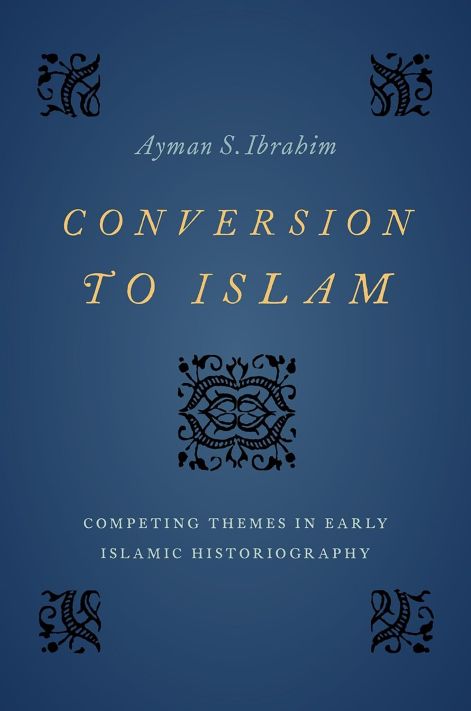
Conversion to Islam: Competing Themes in Early Islamic Historiography
oxford university press, 2021
Why did non-Muslims convert to Islam during Muhammad’s life and under his immediate successors? How did Muslim historians portray these conversions? Why did their portrayals differ significantly? To what extent were their portrayals influenced by their time of writing, religious inclinations, and political affiliations? These are the fundamental questions that drive this study.
Relying on numerous works, including primary sources from over a hundred classical Muslim historians, Conversion to Islam is the first scholarly study to detect, trace, and analyze conversion themes in early Muslim historiography, emphasizing how classical Muslims remembered conversion, and how they valued and evaluated aspects of it. Ibrahim examines numerous early Muslim sources and wrestles with critical observations regarding the sources’ reliability and unearths the hidden link between historical narratives and historians’ religious sympathies and political agendas. This study leads readers through a complex body of literature, provides insights regarding historical context, and creates a vivid picture of conversion to Islam as early Muslim historians sought to depict it.
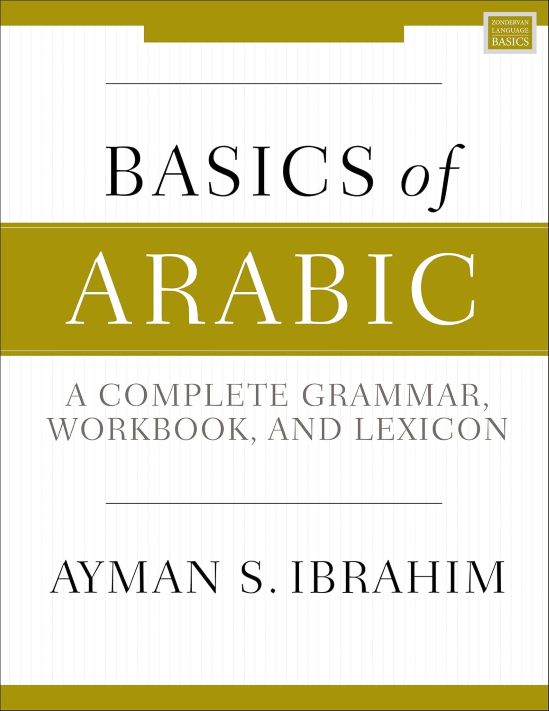
Basics of Arabic: A Complete Grammar, Workbook, and Lexicon
zondervan, 2021
An ideal introduction to Arabic for beginning students and independent learners, Basics of Arabic is an introductory grammar, workbook, and lexicon for learning Modern Standard Arabic. Designed for students approaching Arabic for the first time, the book provides them with all the tools necessary to develop skills in reading and writing Arabic. Students will learn Arabic grammar and vocabulary and be able to translate key Arabic passages from biblical and qur’anic texts.
Each lesson includes:
- A thorough and understandable introduction to a particular grammatical feature in Arabic
- List of vocabulary to be memorized
- Exercises for practice and reinforcement of key concepts
Basics of Arabic will help readers:
- Recite the Arabic alphabet
- Read and pronounce Arabic words
- Learn the Arabic noun and verbal system
- Understand syntax for writing and reading sentences
Additional translation exercises and a complete lexicon are included at the back of the book. Ideal for students, missionaries, independent learners, and homeschoolers this accessible guide give readers a clear and understandable introduction to this important language.
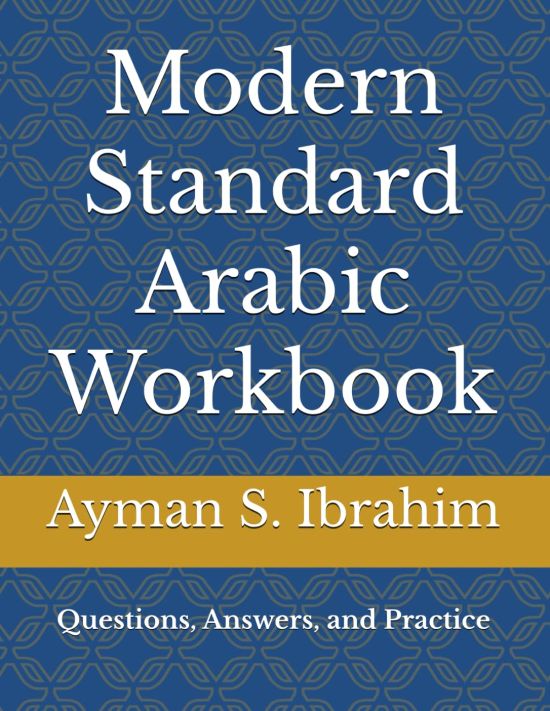
Modern Standard Arabic Workbook: Questions, Answers, and Practice
2025
Master Arabic with Confidence!
Ahlan wa sahlan! Dive into the beauty of Modern Standard Arabic with this dynamic workbook, packed with hundreds of practice questions and clear answers. Designed to complement Basics of Arabic, this standalone resource helps beginners and advanced learners alike build a strong foundation in al-fuṣḥā—the Arabic used across 22+ countries in media and official settings.
With 20 expertly crafted lessons, including in-depth verb exercises, this workbook offers engaging puzzles, real-world vocabulary from the Bible and Quran, and famous Arabic texts to make learning meaningful. No prior knowledge needed—just start practicing, check your answers, and watch your skills grow!
Read, write, and speak Arabic with confidence using varied exercises that challenge and inspire. Perfect for self-study or paired with Basics of Arabic for deeper insights. Form daily habits, craft sentences, and unlock the joy of Arabic fluency.
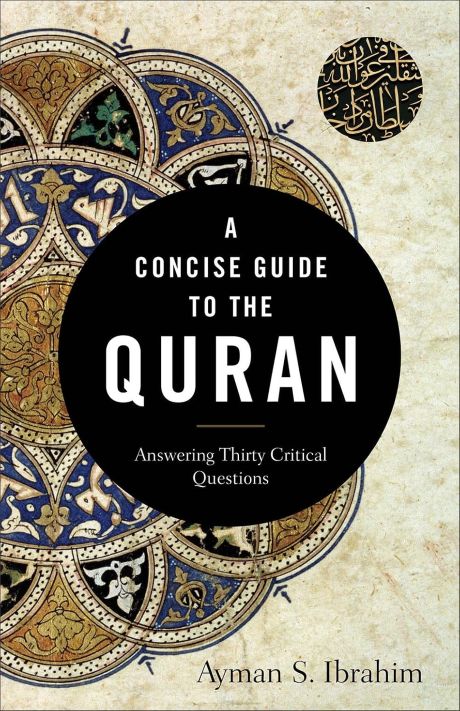
A Concise Guide to the Quran: Answering Thirty Critical Questions
baker academic, 2020
What is so unique about Islam’s scripture, the Quran? Who wrote it, and when? Can we trust its statements to be from Muhammad? Why was it written in Arabic? Does it command Muslims to fight Christians? These are a few of the thirty questions answered in this clear and concise guide to the history and contents of the Quran.
Using a question-and-answer format, Ibrahim covers critical questions about the most sacred book for Muslims. He examines Muslim and non-Muslim views concerning the Quran, shows how the Quran is used in contemporary expressions of Islam, answers many of the key questions non-Muslims have about the Quran and Islam, and reveals the importance of understanding the Quran for Christian-Muslim and Jewish-Muslim interfaith relations.
This introductory guide is written for anyone with little to no knowledge of Islam who wants to learn about Muslims, their beliefs, and their scripture.
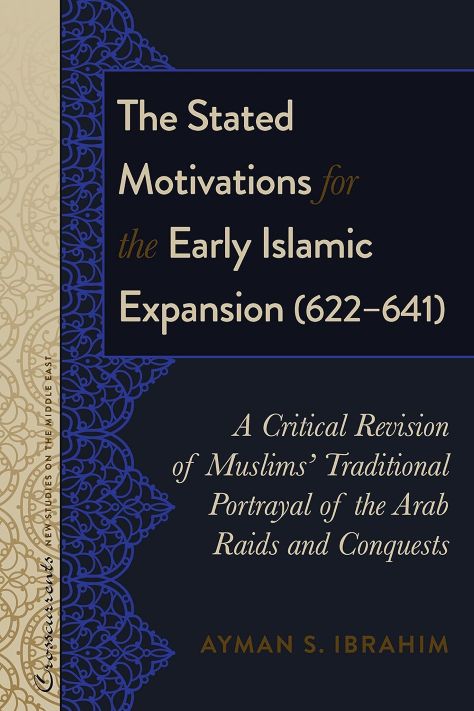
The Stated Motivations for the Early Islamic Expansion: A Critical Revision of Muslims’ Traditional Portrayal of the Arab Raids and Conquests
peter lang, 2018
What motivated the early Islamic conquests? Did the Arabs fight for Allah, or for wealth and dominance? Were the conquerors principally Arabs, or specifically Muslims? Were the Muslim believers motivated by religious zeal to proclaim Islam to the non-Muslims? Consequently, was Islam spread by the sword? This is a question that has crucial implications today.
The Stated Motivations for the Early Islamic Expansion (622–641) extensively analyzes the earliest Arabic Muslim sources to answer these and other questions. It relies on over 400 works, including primary sources written by more than 90 medieval Muslim authors, Sunni, Shiite, Sufi, and Mu’tazilite. It explores how medieval Muslim writers represented the early Arab leaders, and how much we can trust their reports. It concludes with an examination of the Qur’ān’s commands regarding fighting and armed jihad, and questions what later commentators suggest about fighting the non-Muslims, specifically how radical Muslim interpretations match or violate Islam’s sacred scripture.
This is the first scholarly analysis to focus on the stated motivations for the early Islamic expansion in the first two decades of Islam. It is a valuable resource for courses on Muslim history, introduction to Islam, Islamic origins and texts, classical and modern Islamic thought, Muhammad’s biography, Islamic Caliphates, Muslim-Christian relations, Jews in the Muslim world, Middle Eastern history, and world history. In the age of ISIS, Qaeda, and Boko Haram, this book reflects on how historiographical accounts can inform today’s multi-cultural and multi-religious societies on complex relations, mutual respect, and religious coexistence.
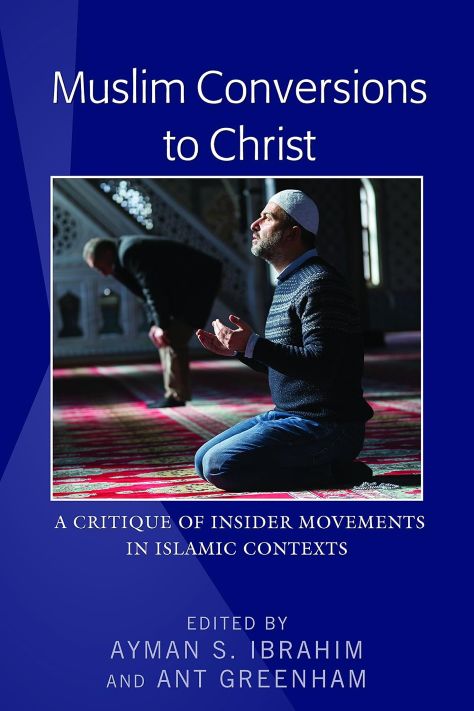
Muslim Conversions to Christ: A Critique of Insider Movements in Islamic Contexts
peter lang, 2018
Muslim Conversions to Christ focuses on the so-called Insider Movement (as promoted by certain missiologists). Drawing on international scholars and practitioners in the fields of the history and nature of Islam, the Qur’an, Christian-Muslim relations, biblical theology, and practical missiology, this book presents a solid academic rejoinder to the IM phenomenon. Moreover, it brings into the conversation the voices of believers from Muslim backgrounds (BMBs), Middle Eastern scholars, and missiologists living among Muslims in the Middle East and elsewhere. Readers will understand that Muhammad is not a prophet based on the Bible and that the Qur’an is not a scriptural guide for Muslims after their conversion. Rather than acquiesce in IM marketing ploys, such readers will be encouraged to stand in solidarity with BMBs who suffer for their faith.